Battle of Sekigahara
The one-day battle that decided who would rule Japan for 250 years — turned by a mid-battle betrayal (1600).
Scroll to advance through the battle ↓
 Ishida Mitsunari
Fog-bound deployment in the Sekigahara basin
Through a rainy night the Western Army occupies the hills ringing the Nakasendō road — Ishida Mitsunari on Mount Sasao (far left) with Shima Sakon forward, Ukita Hideie, Konishi Yukinaga and Ōtani Yoshitsugu across the valley floor, Kobayakawa Hideaki commanding Mount Matsuo on the far right, and the Mori host on Mount Nangū to the rear. By 04:30 they form a wall blocking Ieyasu, whose Eastern columns grope forward in dense fog until the two vanguards nearly collide by accident and recoil.
 Ii Naomasa
The Red Devils open the battle
As the fog lifts, Ii Naomasa slips his crimson-armoured 'Red Devils' past Fukushima Masanori's assigned vanguard under pretext of a scouting ride and charges Ukita Hideie's line, seizing the honour of the first strike. Volleys of matchlock fire erupt along the centre and the general engagement begins.
 Ukita Hideie
Fukushima and Ukita grind on the eastern flank
Fukushima Masanori throws his ~6,000 men against Ukita Hideie's ~17,000, the largest Western contingent. The fighting surges back and forth across the fields south-east of Mitsunari's position; Ukita's line holds and at times drives Fukushima back, and this sector becomes the fiercest sustained melee of the day.
Ishida MitsunariThe centre and the assault on Mount Sasao
Konishi Yukinaga and Ōtani Yoshitsugu hold the centre-left while Kuroda Nagamasa and Hosokawa Tadaoki drive against Ishida Mitsunari's own camp on Mount Sasao, where Shima Sakon leads a stubborn forward defence behind palisades. The Western hill positions absorb repeated Eastern assaults without breaking.
Stalemate: the hills that would not move
The battle deadlocks. On Mount Nangū to the rear, Mōri Hidemoto's large host stays put because Kikkawa Hiroie — secretly bound to Ieyasu — blocks the road forward, famously stalling with the excuse that his men are 'in the middle of eating lunch.' Mitsunari fires signal beacons to summon Kobayakawa on Mount Matsuo and the Mori from Nangū; neither answers. Around 11:00 Shima Sakon is shot and carried off, a blow to Western morale.
 Kobayakawa Hideaki
Kobayakawa charges down Mount Matsuo
The pivot of the battle. Impatient with Kobayakawa Hideaki's hesitation and fearing envelopment, Ieyasu orders matchlock fire onto Mount Matsuo to force his hand. Kobayakawa's ~15,600 men pour down the mountain — but instead of striking the Eastern Army, they crash into their own side, hitting Ōtani Yoshitsugu's flank. (Revisionist historians argue Kobayakawa had already agreed to defect and needed no provocation.)
 Ōtani Yoshitsugu
Ōtani's stand and seppuku
Ōtani Yoshitsugu, who had half-anticipated the betrayal, wheels his small force to meet Kobayakawa — but is simultaneously struck by the secondary defections of Wakisaka Yasuharu, Ogawa Suketada, Akaza Naoyasu and Kutsuki Mototsuna. Hopelessly outnumbered, his line disintegrates; Ōtani commits seppuku and has his head hidden so it cannot be taken. It was never found.
Ishida MitsunariThe line breaks and Mitsunari flees
With Ōtani's sector gone, the rot spreads down the Western line. Ukita Hideie and Konishi Yukinaga break and flee around 13:00; Ishida Mitsunari abandons Mount Sasao and rides off around 13:30 as his coalition disintegrates. The reinforcements he had signalled for never come.
 Shimazu Yoshihiro
Shimazu Yoshihiro cuts through the enemy
Refusing to retreat rearward, the encircled Shimazu Yoshihiro leads his tiny band on a desperate charge straight through the victorious Eastern Army — the famous 'Shimazu no Nokiguchi' retreat-forward. His fire wounds the pursuing Ii Naomasa; of some 1,500–2,000 Shimazu men, only around 200 survive to escape the field.
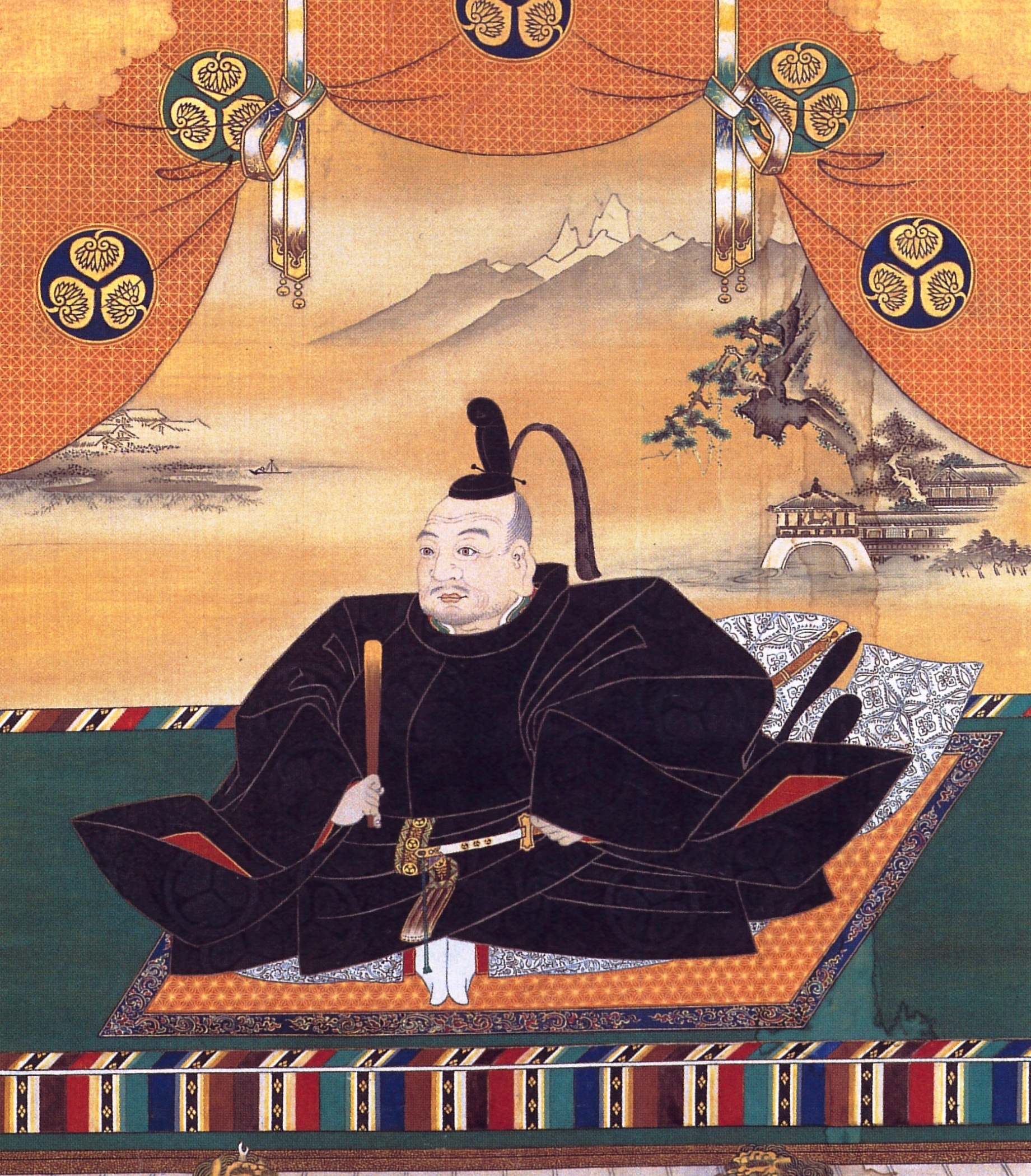 Tokugawa Ieyasu
Ieyasu takes the field
The Mori host on Mount Nangū withdraws without ever engaging, Kikkawa having secretly promised Ieyasu neutrality. With the field won, Tokugawa Ieyasu — who had moved his command from Momokubariyama forward to Jinbano — conducts the ceremonial head-viewing around 14:30. Roughly 30,000 dead lie in the basin. The road to the Tokugawa shogunate is open.
Phase by phase
- Dawn deployment in fog · ~04:00–07:30, 21 Oct 1600Ishida MitsunariFog-bound deployment in the Sekigahara basinThrough a rainy night the Western Army occupies the hills ringing the Nakasendō road — Ishida Mitsunari on Mount Sasao (far left) with Shima Sakon forward, Ukita Hideie, Konishi Yukinaga and Ōtani Yoshitsugu across the valley floor, Kobayakawa Hideaki commanding Mount Matsuo on the far right, and the Mori host on Mount Nangū to the rear. By 04:30 they form a wall blocking Ieyasu, whose Eastern columns grope forward in dense fog until the two vanguards nearly collide by accident and recoil.Sekigahara basin, Mino Province (Gifu) · documented · NPS Ch.3 Battle of Sekigahara (Western hill occupation, 04:30 line); Wikipedia Battle of Sekigahara (dawn fog, accidental vanguard contact); Osprey Campaign 40 deployment maps
- Opening clash — Ii Naomasa fires the first shots · ~08:00 (traditional; ~10:00 revised)Ii NaomasaThe Red Devils open the battleEastern Army (Tokugawa Ieyasu)As the fog lifts, Ii Naomasa slips his crimson-armoured 'Red Devils' past Fukushima Masanori's assigned vanguard under pretext of a scouting ride and charges Ukita Hideie's line, seizing the honour of the first strike. Volleys of matchlock fire erupt along the centre and the general engagement begins.Central valley floor, north-west of Sekigahara village · reconstructed · Wikipedia Battle of Sekigahara (Ii Naomasa's 3,600 red-clad troops, 30-horseman feint into the Western line); NPS Ch.3 (Ii's deceptive advance triggering the opening volleys)
- Fukushima vs Ukita on the right · ~08:00–09:00Ukita HideieFukushima and Ukita grind on the eastern flankFukushima Masanori throws his ~6,000 men against Ukita Hideie's ~17,000, the largest Western contingent. The fighting surges back and forth across the fields south-east of Mitsunari's position; Ukita's line holds and at times drives Fukushima back, and this sector becomes the fiercest sustained melee of the day.Eastern flank, south-east of the valley floor · reconstructed · Wikipedia Battle of Sekigahara (Fukushima Masanori engages Ukita Hideie); NPS Ch.3 (Ukita's 17,000-man line, brutal close-quarters exchange)
- Center engagement — Konishi and the Kuroda/Hosokawa press on Ishida · ~09:00–10:00Ishida MitsunariThe centre and the assault on Mount SasaoKonishi Yukinaga and Ōtani Yoshitsugu hold the centre-left while Kuroda Nagamasa and Hosokawa Tadaoki drive against Ishida Mitsunari's own camp on Mount Sasao, where Shima Sakon leads a stubborn forward defence behind palisades. The Western hill positions absorb repeated Eastern assaults without breaking.Western centre and Mount Sasao (Sasaoyama) · reconstructed · Japanese Wikipedia 関ヶ原の戦い (Kuroda Nagamasa, Hosokawa Tadaoki against Ishida's Sasaoyama camp; Shima Sakon forward with palisades); NPS Ch.3 (centre holding)
- The stalled centre — Mori inactive on Mount Nangū · ~10:00–11:30Stalemate: the hills that would not moveWestern Army (Ishida Mitsunari)The battle deadlocks. On Mount Nangū to the rear, Mōri Hidemoto's large host stays put because Kikkawa Hiroie — secretly bound to Ieyasu — blocks the road forward, famously stalling with the excuse that his men are 'in the middle of eating lunch.' Mitsunari fires signal beacons to summon Kobayakawa on Mount Matsuo and the Mori from Nangū; neither answers. Around 11:00 Shima Sakon is shot and carried off, a blow to Western morale.Mount Nangū (Nangūsan), south-east rear · reconstructed · NPS Ch.3 (Kikkawa Hiroie's 'eating lunch' refusal, signal flares, Shima Sakon wounded ~11:00); Wikipedia Sekigahara Campaign (Mōri Hidemoto/Kikkawa Hiroie inactive on Mount Nangū)
- Kobayakawa Hideaki's defection · ~12:00 (traditional noon turning point)Kobayakawa HideakiKobayakawa charges down Mount MatsuoWestern Army (Ishida Mitsunari)The pivot of the battle. Impatient with Kobayakawa Hideaki's hesitation and fearing envelopment, Ieyasu orders matchlock fire onto Mount Matsuo to force his hand. Kobayakawa's ~15,600 men pour down the mountain — but instead of striking the Eastern Army, they crash into their own side, hitting Ōtani Yoshitsugu's flank. (Revisionist historians argue Kobayakawa had already agreed to defect and needed no provocation.)Mount Matsuo (Matsuoyama) descending north toward Ōtani's line · reconstructed · NPS Ch.3 (Ieyasu's provocative volley toward Matsuoyama, Kobayakawa's 15,000 charge the Ōtani flank ~noon); Wikipedia Battle of Sekigahara (revisionist pre-battle defection debate); Japanese Wikipedia 松尾山 (岐阜県) for Matsuoyama coordinates 35.34667N/136.45361E
- Ōtani Yoshitsugu overwhelmed · ~12:00–12:30Ōtani YoshitsuguŌtani's stand and seppukuWestern Army (Ishida Mitsunari)Ōtani Yoshitsugu, who had half-anticipated the betrayal, wheels his small force to meet Kobayakawa — but is simultaneously struck by the secondary defections of Wakisaka Yasuharu, Ogawa Suketada, Akaza Naoyasu and Kutsuki Mototsuna. Hopelessly outnumbered, his line disintegrates; Ōtani commits seppuku and has his head hidden so it cannot be taken. It was never found.Ōtani Yoshitsugu's camp near the base of Mount Matsuo (Tenmanyama) · reconstructed · NPS Ch.3 (Kobayakawa plus four defectors overwhelm Ōtani; his seppuku and hidden head); Wikipedia Battle of Sekigahara (Wakisaka, Ogawa, Akaza, Kutsuki switch sides)
- Western Army collapse · ~12:30–13:30Ishida MitsunariThe line breaks and Mitsunari fleesWestern Army (Ishida Mitsunari)With Ōtani's sector gone, the rot spreads down the Western line. Ukita Hideie and Konishi Yukinaga break and flee around 13:00; Ishida Mitsunari abandons Mount Sasao and rides off around 13:30 as his coalition disintegrates. The reinforcements he had signalled for never come.Mount Sasao and the collapsing Western centre · reconstructed · NPS Ch.3 (Ukita and Konishi flee ~13:00, Mitsunari retreats ~13:30, no reinforcements); Wikipedia Battle of Sekigahara (coalition disintegration)
- Shimazu's breakout charge · ~13:00–13:30Shimazu YoshihiroShimazu Yoshihiro cuts through the enemyWestern Army (Ishida Mitsunari)Refusing to retreat rearward, the encircled Shimazu Yoshihiro leads his tiny band on a desperate charge straight through the victorious Eastern Army — the famous 'Shimazu no Nokiguchi' retreat-forward. His fire wounds the pursuing Ii Naomasa; of some 1,500–2,000 Shimazu men, only around 200 survive to escape the field.Central field, breaking eastward through the Eastern lines · reconstructed · Wikipedia Battle of Sekigahara (Shimazu encirclement, ~200 survivors, Ii Naomasa wounded by Shimazu fire); NPS Ch.3 (Shimazu cut through the Eastern forces)
- Eastern victory and head-viewing · ~14:00–14:30Tokugawa IeyasuIeyasu takes the fieldEastern Army (Tokugawa Ieyasu)The Mori host on Mount Nangū withdraws without ever engaging, Kikkawa having secretly promised Ieyasu neutrality. With the field won, Tokugawa Ieyasu — who had moved his command from Momokubariyama forward to Jinbano — conducts the ceremonial head-viewing around 14:30. Roughly 30,000 dead lie in the basin. The road to the Tokugawa shogunate is open.Ieyasu's final camp at Jinbano, central Sekigahara · reconstructed · NPS Ch.3 (Mori withdraw unopposed, Kikkawa's secret pledge, Ieyasu's 14:30 head-viewing, ~30,000 dead); Japanese Wikipedia 関ヶ原の戦い (Ieyasu moves from Momokubariyama to the central camp)
Sources
- Wikipedia: Battle of Sekigahara (https://en.wikipedia.org/wiki/Battle_of_Sekigahara)
- Japanese Wikipedia: 関ヶ原の戦い (https://ja.wikipedia.org/wiki/関ヶ原の戦い)
- US National Park Service — Chapter 3: Battle of Sekigahara, staged narrative with times (https://www.nps.gov/articles/000/battle-of-sekigahara.htm)
- Anthony J. Bryant, Osprey Campaign 40: Sekigahara 1600 — The Final Struggle for Power (Osprey Publishing)
- Japanese Wikipedia: 松尾山 (岐阜県) for Matsuoyama coordinates 35.34667N, 136.45361E (https://ja.wikipedia.org/wiki/松尾山_(岐阜県))
- Gifu Prefecture official Sekigahara battlefield guide / Sekigahara1600.com commander-camp monument sites (https://www.sekigahara1600.com/)
On the data
DEPLOYMENTS are well documented (40 stone commander-position monuments mark the surveyed camp sites); the OVERALL arc — fog, Eastern first strike, stalled centre, Kobayakawa defection, collapse — is firmly attested. INTRA-BATTLE TIMING is NOT: traditional Edo chronicles put the start at ~08:00 and the whole action across the morning, but modern historians (e.g. Andō Yūichirō, reading Ieyasu's own letter) argue the real fight was ~10:00–12:00, roughly two hours. I use the traditional NPS staged clock for narrative pacing but tag every timed phase 'reconstructed.' Vivid details — Kikkawa's 'eating lunch' excuse, Shimazu's refusal to fight, Ieyasu firing on Matsuoyama to force Kobayakawa's hand — come from later, partly semi-legendary sources; revisionist scholars argue Kobayakawa had already agreed to defect beforehand and did not need to be provoked. Troop numbers (88,888 / 81,890) are traditional figures and approximate. COORDINATES: Matsuoyama (Kobayakawa) is the one exact figure from Wikipedia (35.34667, 136.45361); all other camp coordinates are placed from documented monument geography relative to Sekigahara town (35.3572, 136.4681) and Mount Sasao (NW), Momokubariyama (E), and the central Fujikawa 'decisive-battle' marker — each accurate to within a few hundred metres and all inside the real basin, but not GPS-surveyed by me. Historian Jun Shiramine has questioned the reliability of the traditional deployment maps themselves.
Hand-authored from the sources below. Spotted a mistake? Email [email protected].